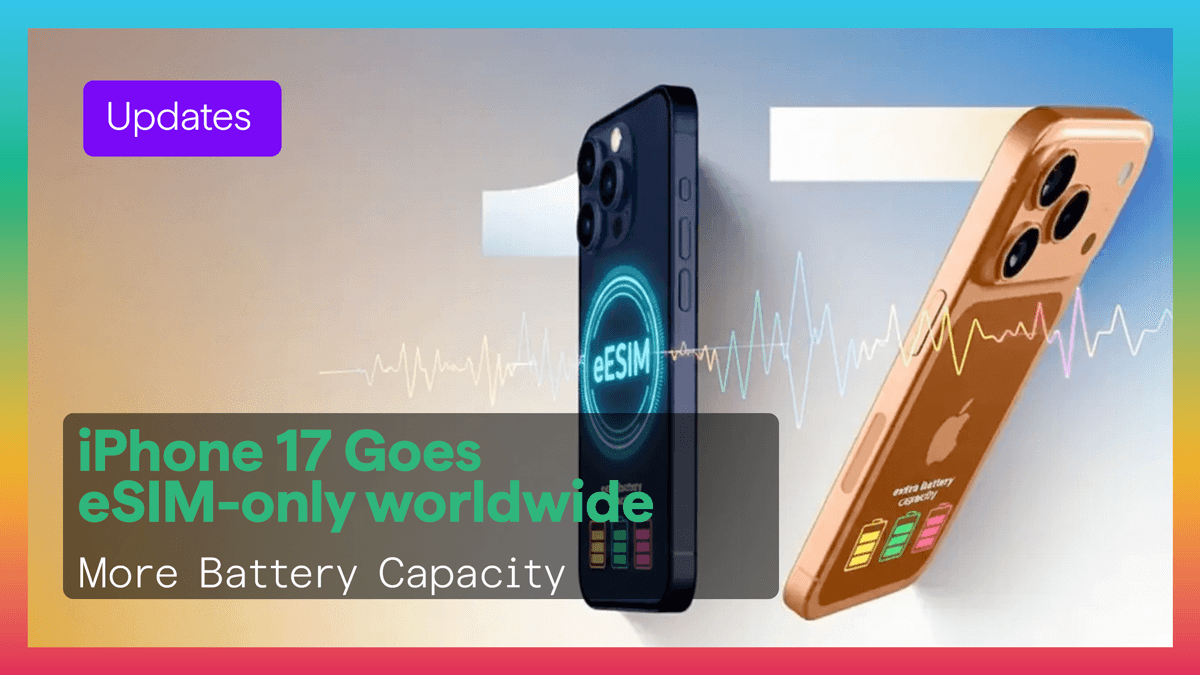
Apple continues pushing toward a fully digital mobile future, and early expectations around the iPhone 17 lineup suggest a stronger focus on eSIM-only connectivity in more markets.
By reducing dependence on physical SIM trays, Apple can simplify device design and potentially free internal space for battery improvements and other hardware upgrades.
For travelers, this could mean longer battery life, easier mobile setup, and a smoother experience with travel eSIM platforms like Figabytes.
An eSIM-only device removes the need for physical SIM cards and manual swapping.
That means:
Everything becomes digital and faster.
Removing hardware components such as SIM trays may create more internal design flexibility.
That space can potentially be used for:
For travelers using maps, ride apps, translation tools, and mobile data all day, every extra hour of battery life matters.
Travelers using Figabytes already benefit from digital-first connectivity.
With an eSIM-ready iPhone, you can:
No roaming stress and no physical SIM swapping.
Even as eSIM expands, iPhones continue supporting multiple lines digitally.
This helps travelers keep:
That creates a cleaner and smarter travel setup.
If you are visiting several countries in one journey, eSIM is especially useful.
With Figabytes regional plans, travelers can stay connected across destinations without replacing SIM cards at every border.
Popular use cases include:
Figabytes is built for the new generation of eSIM-first devices.
Benefits include:
When Apple pushes new standards, the market often follows.
That could accelerate:
Travelers are likely to benefit the most.
If iPhone 17 continues the move toward eSIM-first hardware, it signals where mobile connectivity is heading.
For travelers, that future is simple:
And with Figabytes, you are already ready for it.

